After years favouring Class A, Manhattan's office recovery is finally reaching Class B. Here's what it means for landlords.
- Manhattan's Class B office buildings are leasing above their pre-pandemic pace in 2026, a clear change after years of weaker performance, with Class B leasing up 14% on pre-pandemic levels and 28% on last year, according to CoStar.
- Landlords holding Class B stock written off during the downturn have a real opening, but only if the space can be shown working for a modern brief, not just marketed as available.
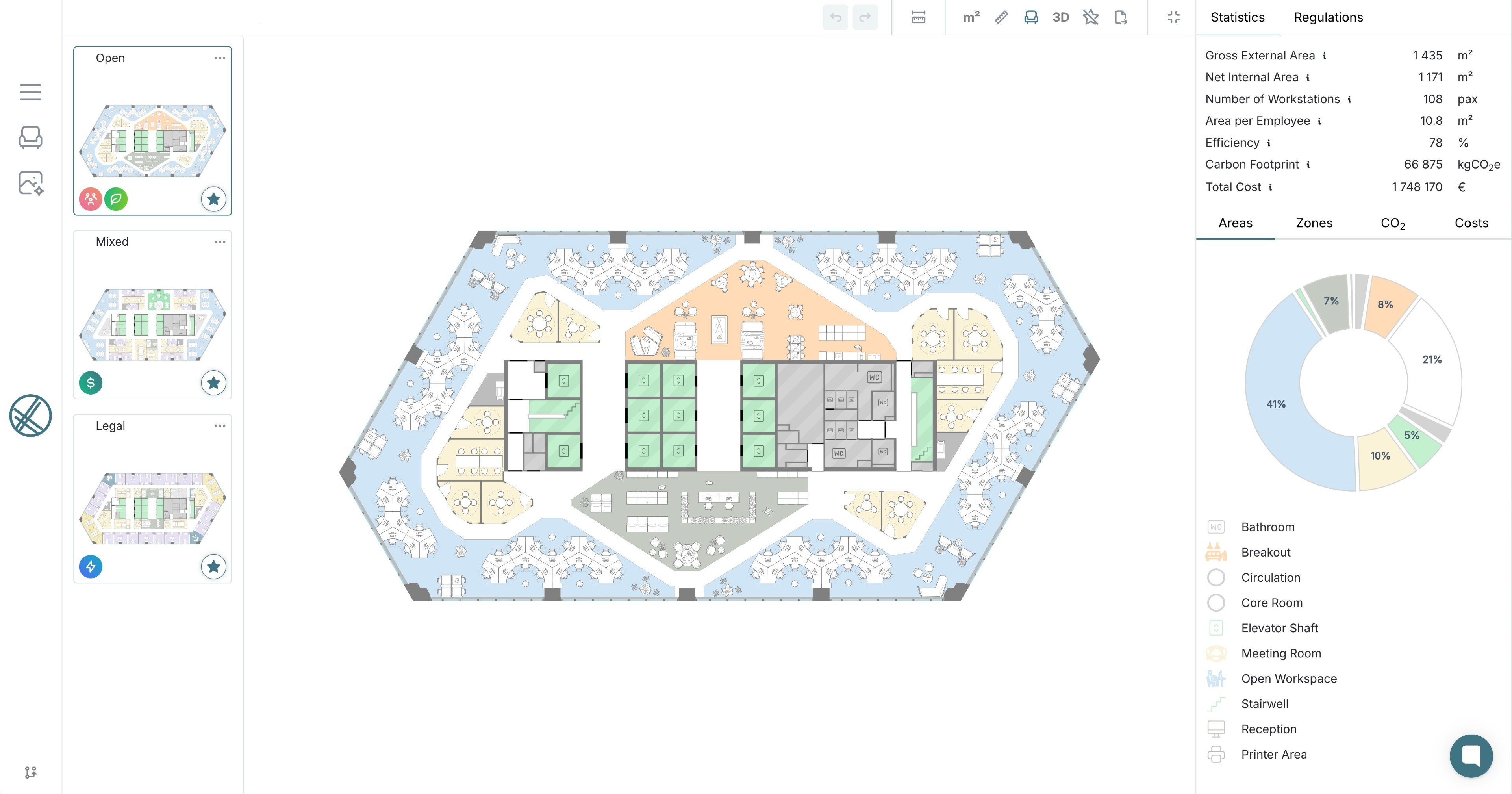
- laiout lets Class B landlords prove that fit before committing capital, market it as competitively as Class A, and negotiate on real numbers.
Manhattan's Class B and C office buildings are leasing above their pre-pandemic pace in 2026, a clear change after several years of weaker performance, according to CoStar. For the first time since the downturn began, the recovery is reaching Class B stock directly, not only the trophy towers that captured almost all of it until now.
- Class B demand is rebounding with real numbers behind it: "After several years in which leasing activity was heavily concentrated in higher-end Class A buildings, first-half 2026 data shows a notable rebound in Class B demand," said CoStar's Victor Rodriguez. Class B leasing is up 14% on pre-pandemic levels and 28% on last year, with its share of total leasing rising to 45%, up from 43%.
- Even the biggest tenants can't all fit into Class A anymore: Sidley Austin's search for a new Chicago headquarters, over 1,500 employees, hundreds of thousands of square feet, needed transit access and amenities, ran into a shortage of large blocks so severe the firm anchored new construction instead. Nationally, vacancy has fallen for four consecutive quarters as supply keeps contracting.
- The price gap at the top is what makes Class B a real alternative: Premium landlords are already capturing the upside, with top-tier asking rents running roughly 60% above less-desirable stock, some Class A Manhattan rents up 15% year on year. Tenants being priced out of premium space need somewhere credible to land.
This sits alongside the broader vacancy story landlords have been watching all year: less new supply, more demand chasing what exists, and Class B finally getting a share of it.
A Class B floor doesn't sell itself. It has to prove it works before capital moves, look as competitive as Class A while a tenant decides, and hold up once negotiations get serious.
- Test every leasing strategy before you commit capital: Upload the floor plate and test capacity, efficiency and fit-out feasibility, whether that's one tenant on the whole floor or multi-tenancy splitting it into several suites, the pattern Class B sees far more than Class A, replacing guesswork with quantified data before a dollar is spent, the same ROI landlords are already seeing from AI-powered test fits.
- Show it modern, not dated, and let them explore it themselves: Generate a photorealistic AI render, then embed the interactive layout on the listing page with Live Listings, so the "dated" objection gets answered visually before a tour is booked, the same standard landlords are already setting for marketing office space online. A static PDF next to a rendered Class A listing loses before the tour happens.
- Negotiate on real numbers and keep the portfolio in one place: Every layout carries live capacity, cost and efficiency data, and lands automatically in laiout Hub, the same centralisation that replaces CAD-locked floor plans with a searchable spatial hub any authorised team member can open.
Q: What is Class B office space?
Class B office space refers to buildings that are well maintained and functional but lack the prime finishes, amenities or address of a Class A building, typically older stock or a slightly less central location. It sits between Class A, the newest and most prestigious buildings, and Class C, older buildings that need significant investment, in the standard three-tier classification used across US commercial real estate.
Q: Is the Class B rebound happening everywhere, or just in Manhattan?
The clearest data right now is Manhattan-specific: Class B leasing there is up 14% on pre-pandemic levels and 28% on last year in the first half of 2026, with its share of total leasing rising from 43% to 45%. The broader national picture, office vacancy falling for four consecutive quarters against a historic supply-side contraction, supports the same direction elsewhere, though the pace will vary by submarket.
Q: Does laiout replace the work of a leasing broker on a Class B asset?
No. laiout gives a landlord and their broker a configured, credible layout to bring into the conversation already informed. The broker still runs the negotiation and the relationship.
The Class B opportunity will not stay open and uncontested for long. As premium landlords report rising rents and large tenants widen their search beyond a shrinking pool of trophy space, more owners will start pitching their secondary stock into the same conversation.
Book a demo with laiout today and show your next Class B floor working before a tenant settles for someone else's.
- Manhattan Class B office leasing is up 14% on pre-pandemic levels and 28% on last year in the first half of 2026, with its share of total leasing rising from 43% to 45%.
- US office vacancy has fallen for four consecutive quarters, driven by an unprecedented period of shrinking new supply.
- Sidley Austin's Chicago headquarters search ran into a shortage of qualifying large-block buildings, evidence that even the biggest tenants cannot all fit into Class A stock.
- Premium landlords are already capturing outsized rent growth, with top-tier asking rents running roughly 60% above less-desirable stock, the same gap that makes Class B a credible alternative.
- laiout lets Class B landlords test feasibility and multi-tenancy splits, generate photorealistic renders for marketing, and negotiate on real portfolio-wide data, all from one platform.
- Midtier Manhattan offices shine in first half of 2026, CoStar, 8 July 2026.
- US office forecast solidifies as leasing holds steady and supply contracts, CoStar, 5 August 2026.
- The unlikely return of the office skyscraper, CoStar, 12 August 2026.
- Why office landlords like BXP may be back in the driver's seat, CoStar, 29 July 2026.
Author: Theodore Harding, laiout
Get laiout News and Updates right in your inbox.

We're always open to hearing from talented people. If you don't see an open role that fits, send a speculative application to careers@laiout.co.Tell us what you'd bring and why laiout resonates with you.

Sign up to our newsletter


.svg)
.svg)


.svg)

