The M Moser Singapore team on where AI helps designers most and where human judgement still leads.
- The pressure: Workplace design and build teams are working to tighter timelines and higher expectations than ever before.
- The role of AI: The M Moser Singapore team sees AI as most valuable when it enhances a designer's work, from visuals to early experimentation to admin, and not as a replacement for design judgement.
- The standard: Clients increasingly come from design, project management and construction backgrounds, so accuracy carries as much weight as polish.
- The response: Software like laiout helps design firms respond faster, stay flexible and protect time for design judgement.
M Moser Singapore's design team has worked with laiout, and their feedback is shaping what we build next. In this perspective, M Moser Singapore, a workplace design and build firm, shares how its team is navigating a faster, more competitive market and where AI genuinely helps.
Workplace design has always been a race between ambition and the calendar. In competitive markets, proposal windows can be as short as two weeks, and in some markets a single week. Clients expect a complete picture: plans, engineering input, costs and visuals.
- Speed is now part of the brief: Fast, complete responses are expected, so teams have adapted their processes, partnerships and digital workflows to deliver them.
- Competition is global: Firms from Europe, the US and Asia compete for the same work, which raises the bar on both speed and quality.
- Everything is connected: Strategy, design, project management, construction and engineering sit under one roof at M Moser, so early design decisions carry through to cost and delivery.
M Moser has invested in its own digital approach. A dedicated AI team researches new developments and shares them across departments, and in Singapore the design team has spent years building its own libraries of furniture systems and partitions to move faster. Digital craft and design judgement develop side by side.
The M Moser Singapore team's view is pragmatic. Today's AI is good at enhancing an already credible design and less reliable at creating a final design from nothing. At the test-fit stage, that shapes what designers want most. It also reflects a wider shift in the profession, explored in our piece on how AI space planning moves designers from iteration to curation.
- Speed, with room to think first: A credible plan sooner gives teams more time for the thinking that follows, and designers want to map out areas and flow before a plan takes shape, with software that follows their intent.
- Visuals, experimentation and choice: AI can add people, increase realism and set the mood of a render, and it lets designers trial ideas, such as how a fabric or finish might look, and show clients more than one option.
- Less admin, more design: Automating routine tasks around bids and proposals frees designers to spend more time on the work they value most.
Clients are sharper too. Many now come from architecture, design, project management or construction backgrounds, and they scrutinise detail. AI can still invent certain details that do not survive a trained eye. The M Moser Singapore team's approach is to treat AI as an enhancer, be open with clients about what it can and cannot do, and let the designer's judgement have the final say. Wider research points the same way, as covered in why design firms are becoming the most satisfied AI adopters in real estate.
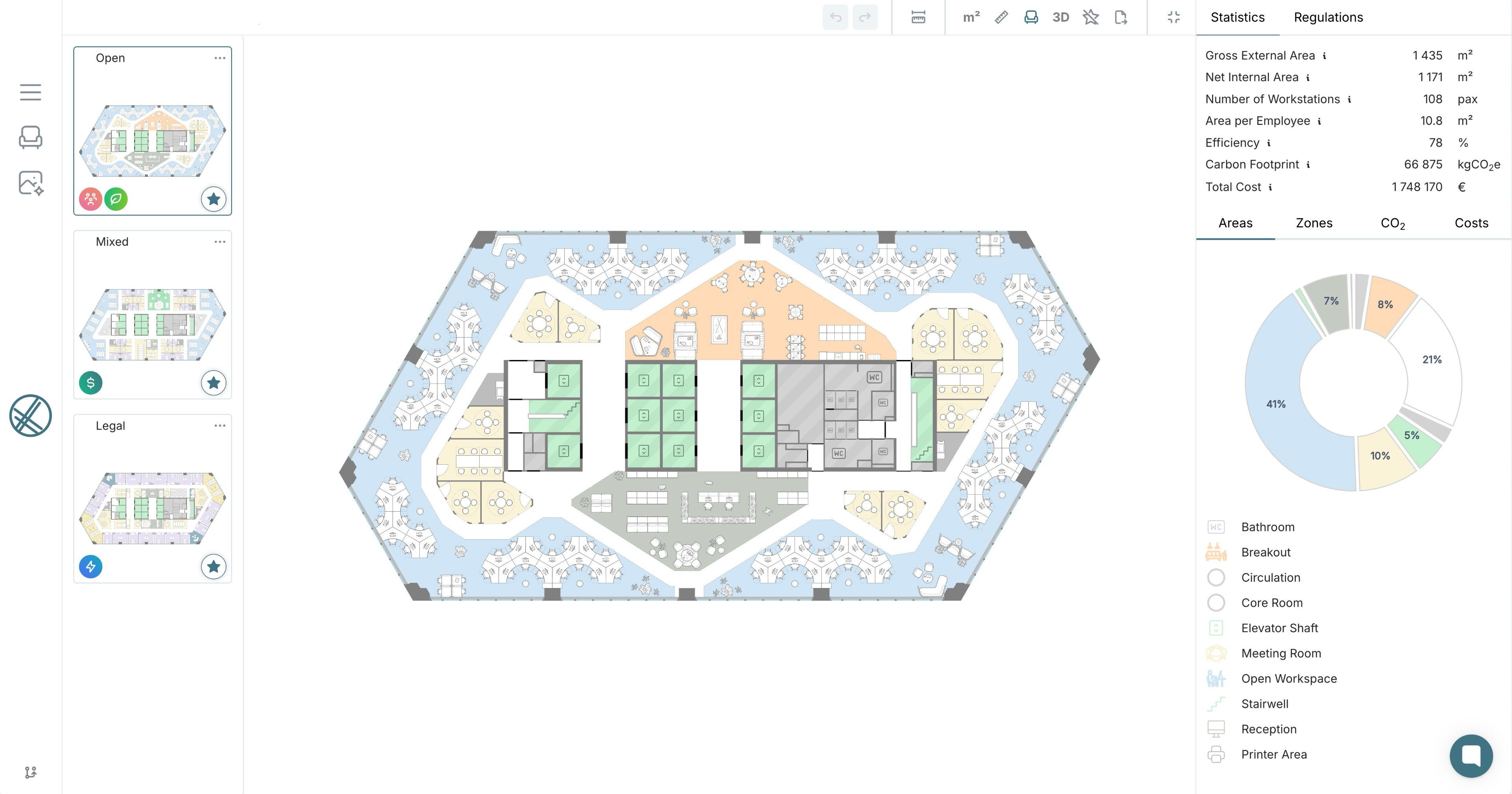
laiout is built on the belief that the designer leads. It generates optimised test fits in seconds, and designers can adjust them live.
Across the industry, the firms navigating a fast-moving market best tend to reach a credible plan sooner, keep their options open for longer and protect time for design judgement. Software like laiout is built to support all three.
- Respond faster: Optimised test fits in seconds give teams a credible starting point early in a proposal, when time is tightest.
- Stay flexible: Live adjustments let designers shape a plan rather than accept one.
- Show more with less effort: Compare options on capacity, cost and carbon, then turn a layout into AI stills and video renders a client can picture, and share them in a link or branded PDF, so more options can go forward within the same deadline.
- Protect design time: Automating the repeatable early work leaves designers more room for the decisions and client conversations that set a firm apart.
Q: Will AI replace workplace designers?
In the M Moser Singapore team's experience, AI enhances visuals, speeds up experimentation and reduces admin, but clients expect accurate, detailed and honest work, which depends on a designer's judgement.
Q: Where is AI most useful in workplace design today?
In early experimentation, in making visuals more realistic and atmospheric, and in automating repeatable admin around bids and proposals.
Q: How can software like laiout help design firms respond to tight bid timelines?
laiout generates optimised test fits in seconds, lets designers adjust them live and compare options. AI stills and video renders then help show clients more than one option within the same deadline. For the commercial side of early-stage work, see how commercial design studios are absorbing the cost of early-stage test fits.
Competition will keep tightening, and clients will keep raising the bar. The firms that thrive will pair strong design judgement with software that helps them move at the pace the market demands. If you are rethinking how your design team responds to a faster market, we would like to hear how you work. Book a demo with laiout and talk us through your workflow.
- AI is most valuable as an enhancer of design work, not a replacement for it.
- Visuals, early experimentation and admin are where M Moser Singapore sees the clearest gains.
- Every AI-enhanced visual still needs a designer's review.
- Clients increasingly have design and construction backgrounds, so accuracy and honesty matter.
- Software like laiout helps design firms respond faster, stay flexible and protect time for design judgement.
- Insights from the M Moser Singapore design team, November 2026.
Author: Theodore Harding, laiout
Get laiout News and Updates right in your inbox.

We're always open to hearing from talented people. If you don't see an open role that fits, send a speculative application to careers@laiout.co.Tell us what you'd bring and why laiout resonates with you.

Sign up to our newsletter


