Landlords usually pay for a test fit, but you have to ask, and the number often surprises people.
- Most landlords cover a tenant's test fit through a tenant improvement (TI) allowance built into the lease negotiation, but only if someone asks for it.
- Typical test fit costs run $0.12 to $0.15 per square foot when a landlord commissions the work, or a few hundred to several thousand dollars per option when commissioned independently.
- laiout skips the wait entirely: generate your own test fit in minutes, before a landlord's architect opens the brief.
In most commercial leases, the landlord pays, not the tenant. Park Realty's tenant guide notes that when a broker negotiates terms in a Letter of Intent, the landlord typically builds a tenant improvement allowance, a TI allowance, into the agreement to cover a test fit, treating the cost as a marketing expense worth absorbing to keep their building on the shortlist. New York Offices puts a number on it: landlords usually cover one or two test fit plans for qualified tenants, with larger tenants or full-floor leases sometimes getting full architectural services upfront.
The catch, in both sources: it's rarely automatic. A tenant representative broker has to request it, usually at the LOI stage, before the landlord retains an architect to produce a plan against the tenant's headcount and requirements.
A landlord-commissioned test fit typically costs $0.12 to $0.15 per square foot, according to Park Realty, a figure that covers the landlord's architect fee rather than a service the tenant pays for out of pocket. Where a test fit is commissioned independently, comparing several buildings before you're in negotiation with any one of them, for instance, the cost is different: laiout's own guide to AI test fit software cites industry estimates of a few hundred to several thousand dollars per option, since each building needs its own separate commission. That gap is exactly where tenants comparing several buildings the traditional way end up in five separate conversations about who's paying, if anyone is.
Even once a landlord agrees to a test fit, the default version might not reflect your brief. New York Offices notes landlords often default to a standard metric, commonly around 175 usable square feet (USF) per employee, which can undersell a space for less typical needs: legal suites, lab layouts, creative bullpen seating. Their advice is to negotiate a custom test fit instead, the same logic behind how occupiers use fit-out cost data to negotiate better leases.
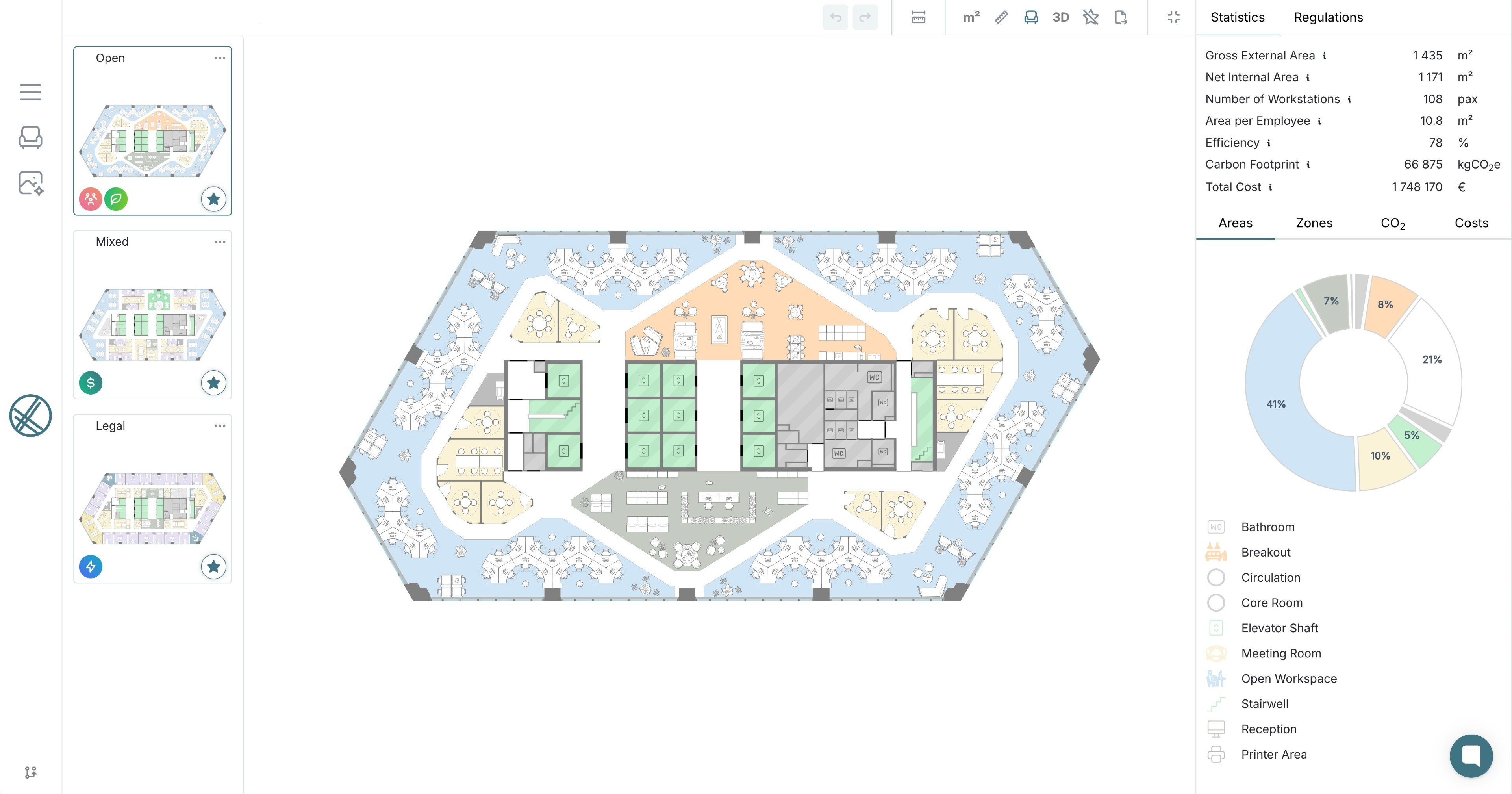
- Know before you spend anything. Upload a floor plate and laiout generates a compliant, code-checked layout against your real headcount in minutes, with live capacity and cost data attached, so you know whether a space works before a landlord's architect has even been briefed, let alone paid.
- Compare every building the same way. Run a test fit for each shortlisted floor plate and use Analytics View to line up capacity, efficiency and cost side by side, the same speed advantage that closes deals faster in competitive leasing markets.
- See it before you commit. Turn the same layout into a 3D walkthrough or photorealistic render, so anyone signing off, not just whoever's reading a floor plan, can move through the space and judge whether it actually works before a lease is signed.
- Walk into the negotiation with evidence, not a request. Share the layout, its stats and the render as a link, no CAD licence needed, so the ask for a custom test fit or a fuller allowance is backed by something concrete instead of a hope that the landlord's default metric happens to fit.
Q: Who pays for a test fit?
Usually the landlord, through a TI allowance built into the lease negotiation, but only if you ask. A tenant representative broker typically requests it at the Letter of Intent stage.
Q: How much does a test fit cost?
Commonly $0.12 to $0.15 per square foot when a landlord commissions it directly, or a few hundred to several thousand dollars per option when commissioned independently, for instance to compare several shortlisted buildings before any allowance is agreed.
Q: Is a test fit part of my tenant improvement allowance?
Often, yes. Landlords frequently fund a test fit from the same TI allowance that later covers construction, though some treat it as a separate marketing cost sitting outside the allowance entirely. Worth confirming which applies before you rely on the figure for your build-out budget.
Q: What if the landlord's standard test fit doesn't match what we need?
Landlords often default to a standard density metric, which can undersell a space for tenants with different requirements. It's worth asking for a custom test fit that reflects your actual brief.
Q: Does laiout replace the need to negotiate a TI allowance?
Not the negotiation itself, since the allowance is still part of the lease economics. What changes is the timing: you can generate and compare your own test fits before that conversation starts.
Most tenants caught out by test fit costs aren't caught out by the number. They're caught out by not knowing to ask, or by waiting weeks for an answer while the deal moves on. The allowance conversation is worth having, but it doesn't have to be what stands between you and knowing whether a space works.
Book a demo with laiout today and see how quickly you could have your own answer, before a landlord's architect even opens the brief.
- Landlords typically cover a tenant's test fit through a tenant improvement (TI) allowance, but tenants generally have to ask for it.
- Test fit costs commonly run $0.12 to $0.15 per square foot when landlord-commissioned, or a few hundred to several thousand dollars per option when commissioned independently.
- Landlords usually cover one or two test fits as standard, with larger tenants and full-floor leases better placed to negotiate more.
- A standard test fit often defaults to around 175 usable square feet (USF) per employee, which doesn't fit every brief.
- laiout lets you generate, compare and visualise your own test fits in minutes using Analytics View, with live cost and capacity data throughout, informing the allowance conversation rather than waiting on it.
- Why Tenants Should Use A Test Fit, Park Realty, updated May 2026.
- What Is Test Fit Planning, and Why Tenants Should Demand It Before Leasing Office Space, New York Offices, updated July 2025.
Author: Theodore Harding, laiout
Get laiout News and Updates right in your inbox.

We're always open to hearing from talented people. If you don't see an open role that fits, send a speculative application to careers@laiout.co.Tell us what you'd bring and why laiout resonates with you.

Sign up to our newsletter


.svg)
.svg)


.svg)

