As companies grow, team structures shift, and work models evolve, office layouts that once seemed ideal can quickly become inefficient.
Many businesses approach office space planning as a one-time project: set up the layout, move employees in, and expect it to work indefinitely. However, as companies grow, team structures shift, and work models evolve, office layouts that once seemed ideal can quickly become inefficient.
Instead of treating office planning as a static process, organizations should view it as an ongoing effort - one that adapts to changing business needs. AI-powered workspace planning tools make it easier than ever to create flexible, optimized layouts that can evolve alongside the company.
Traditional office planning follows a fixed approach:
While this method may have worked in the past, modern businesses face constant change. Growth, team restructuring, and the shift to hybrid work require office layouts to be more flexible than ever before. A static floor plan quickly becomes outdated, leading to:
As a result, companies that fail to reassess their office layouts risk inefficiencies, higher costs, and employee dissatisfaction.
Businesses evolve - and their workspaces should, too. Instead of relying on outdated layouts, companies can use AI-powered workspace planning tools, and the right AI floor plan generator, to continuously optimize their office environments.
A layout that worked for 100 employees may not be suitable for 300. As teams expand, merge, or adopt hybrid work models, office space needs change. Being able to quickly adjust floor plans ensures businesses always make the best use of their available space.
Workplace expectations are shifting. Employees now value collaboration spaces, quiet zones, and flexibility. A rigid layout that only prioritizes desk space can lead to frustration and decreased productivity. Regularly reassessing office layouts helps businesses create a workspace that supports both individual and team-based work.
Rather than making office layout decisions based on guesswork, companies can use AI-generated floor plans to explore different configurations quickly and efficiently. This enables businesses to adapt their space in response to new priorities - whether it’s improving collaboration, reducing costs, or creating a more dynamic work environment.
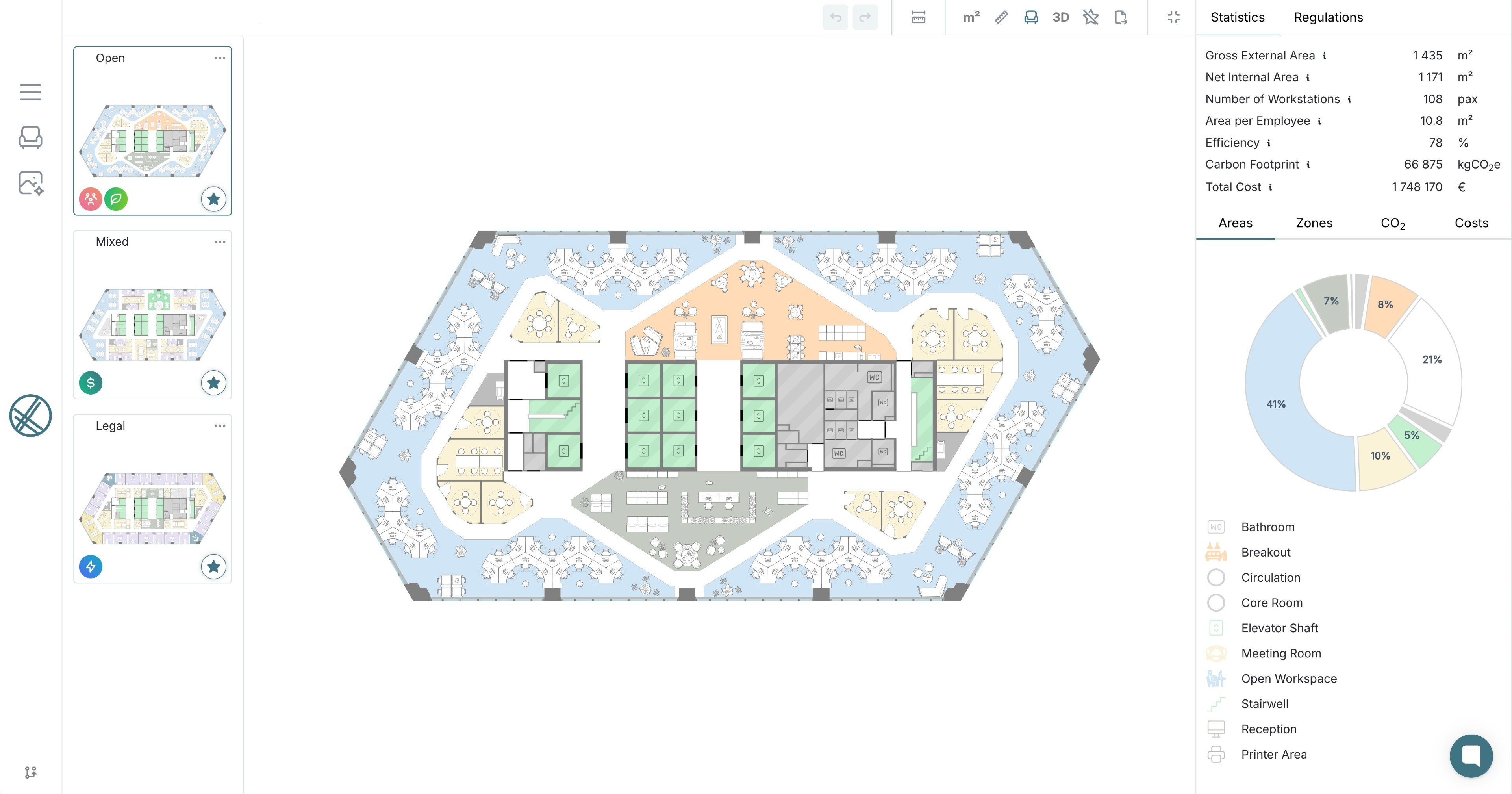
AI-based planning platforms, like laiout, help businesses generate and modify floor plans with ease whenever changes are needed. Instead of starting from scratch, companies can quickly adjust layouts to reflect new workforce needs, team structures, or business objectives.
With laiout, businesses can:
By adopting a data-driven approach to office planning, businesses can create workspaces that are not just functional today but adaptable for the future.
The idea that office space planning is a “set it and forget it” process is outdated. Businesses that embrace ongoing, flexible workspace planning will maximize efficiency, reduce costs, and create a better work environment for employees.
With AI-powered solutions like laiout, companies can design agile, data-informed office layouts that evolve alongside their needs - ensuring that their office space remains a strategic asset, not a limitation.
laiout makes it simple to adapt your office space as your business grows. Discover how our AI-powered platform helps you create flexible, optimized layouts - without the hassle of manual floor planning. Book a call with us today!
Get laiout News and Updates right in your inbox.

We're always open to hearing from talented people. If you don't see an open role that fits, send a speculative application to careers@laiout.co.Tell us what you'd bring and why laiout resonates with you.

Sign up to our newsletter


.svg)
.svg)


.svg)

