Feasibility Studies vs. Test-Fits: Understanding the Difference and How laiout Helps
When planning an office space, the terms feasibility study and test-fit often come up. While they share the common goal of creating functional, efficient layouts, they serve distinct purposes in the design process. Knowing the difference between the two - and how to leverage tools like laiout for both - can save time, reduce costs, and ensure a smoother planning experience.
This article dives into the key differences between feasibility studies and test-fits, a foundation for choosing an AI floor plan generator, explores their unique roles in office planning, and highlights how laiout revolutionises both processes making them faster and more effective.
A feasibility study is the first step in determining whether a specific office space meets your overall project requirements, and our guide to AI feasibility studies for office appraisal goes deeper. It’s a comprehensive analysis that evaluates a range of factors, such as:
laiout’s AI-powered tools streamline feasibility studies by automating critical tasks, including:
By automating the traditionally manual aspects of feasibility studies, laiout ensures you have the information you need to make confident decisions - faster.
While feasibility studies focus on the overall viability of a space, test-fits are about the practical application of those findings. A test-fit determines how specific layouts will work within the physical constraints of the space. It’s the “proof of concept” stage, where you refine the design and tailor it to meet exact needs.
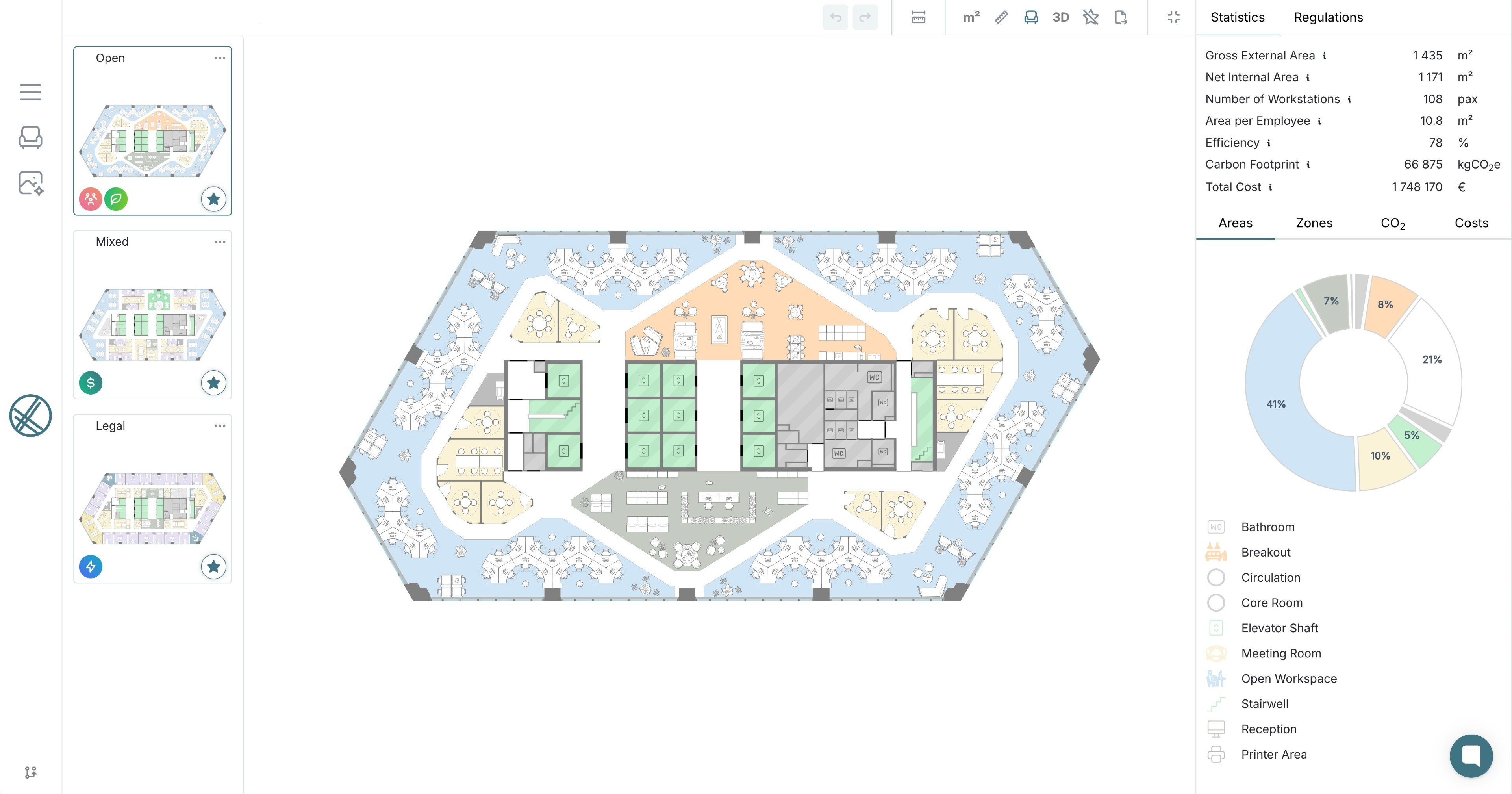
laiout excels at creating test-fits with speed and precision:
laiout’s AI-driven approach ensures that test-fits are not only fast but also accurate, giving teams the flexibility to iterate and refine designs with minimal effort.
While feasibility studies and test-fits both aim to create efficient office layouts, they serve distinct purposes at different stages of the planning process. Here’s how they differ:
Understanding these differences ensures that feasibility studies and test-fits complement each other, forming a comprehensive approach to creating functional, compliant, and cost-effective office spaces.
Both feasibility studies and test-fits play critical roles in the office planning process. Feasibility studies provide the big-picture analysis needed to assess a space’s potential, while test-fits bring that vision into focus by demonstrating how layouts work in practice. Skipping either step can lead to costly mistakes, delays, or layouts that fail to meet expectations.
By combining these processes, businesses can:
laiout’s AI-powered platform integrates seamlessly into both feasibility studies and test-fits, making the entire planning process more efficient and effective. Here’s how:
Feasibility studies and test-fits are the cornerstones of successful office planning. By understanding their unique roles and leveraging tools like laiout, businesses can streamline decision-making, reduce costs, and create office spaces that work for everyone.
Ready to see how laiout can transform your planning process? Explore how our AI-powered platform supports feasibility studies, test-fits, and more to help you design smarter, faster, and with confidence.
Get laiout News and Updates right in your inbox.

We're always open to hearing from talented people. If you don't see an open role that fits, send a speculative application to careers@laiout.co.Tell us what you'd bring and why laiout resonates with you.

Sign up to our newsletter


.svg)
.svg)


.svg)

